After Hours, Your Warehouse Is the Weakest Link: How Autonomous Patrol Closes the Gap
By NeuraIQ Engineering · · 7 min read
11:40pm, loading bay three. A motion sensor tripped forty minutes ago. The control room operator monitors four sites. Camera four shows nothing, because the pallet stack blocks the lens.
This is the gap autonomous patrol is built to close: movement where fixed poles cannot see, on a schedule insurers and auditors can read.
> Quick answer: Autonomous patrol fills the gap between fixed CCTV blind spots and human guard cost by physically moving through the site after hours.
At a glance
→After-hours risk rises when guards, cameras, and alarms each have structural gaps.
→Fixed CCTV is passive; it does not visit blind spots between racks.
→Autonomous patrol adds mapped routes, on-device detection, and digital logs.
→Robots back up guards; humans handle exceptions.
→On-premises video processing supports privacy and offline operation.
In this article
→Why is after hours the weakest link?
→Why does CCTV alone fall short?
→What changes when you add patrol robots?
→How does the patrol loop work?
→When should you choose robots vs guards alone?
→What does a deployment look like in practice?
→What are the honest limits?
→Where NeuraBots fits
→The bottom line
Why is after hours the weakest link?
Your risk profile changes when the last person leaves. Between shifts, during breaks, and on weekends, facilities rely on:
→Predictable guard rounds with 60 to 90 minute gaps on large floors.
→Alarm panels that fatigue staff with false trips.
→Fixed cameras watching the same angle every night.
Intruders learn patterns. Stock moves. Dock doors stay open for late loads. Insurance and audit questions follow incidents you only discover in morning playback.
After hours is not "slower daytime." It is a different threat model with fewer humans and more blind geometry.
Why does CCTV alone fall short?
CCTV is essential but passive. It records. It does not close blind spots between racking rows or verify presence in the returns bay when a guard is on the other side of a 12,000 m² floor.
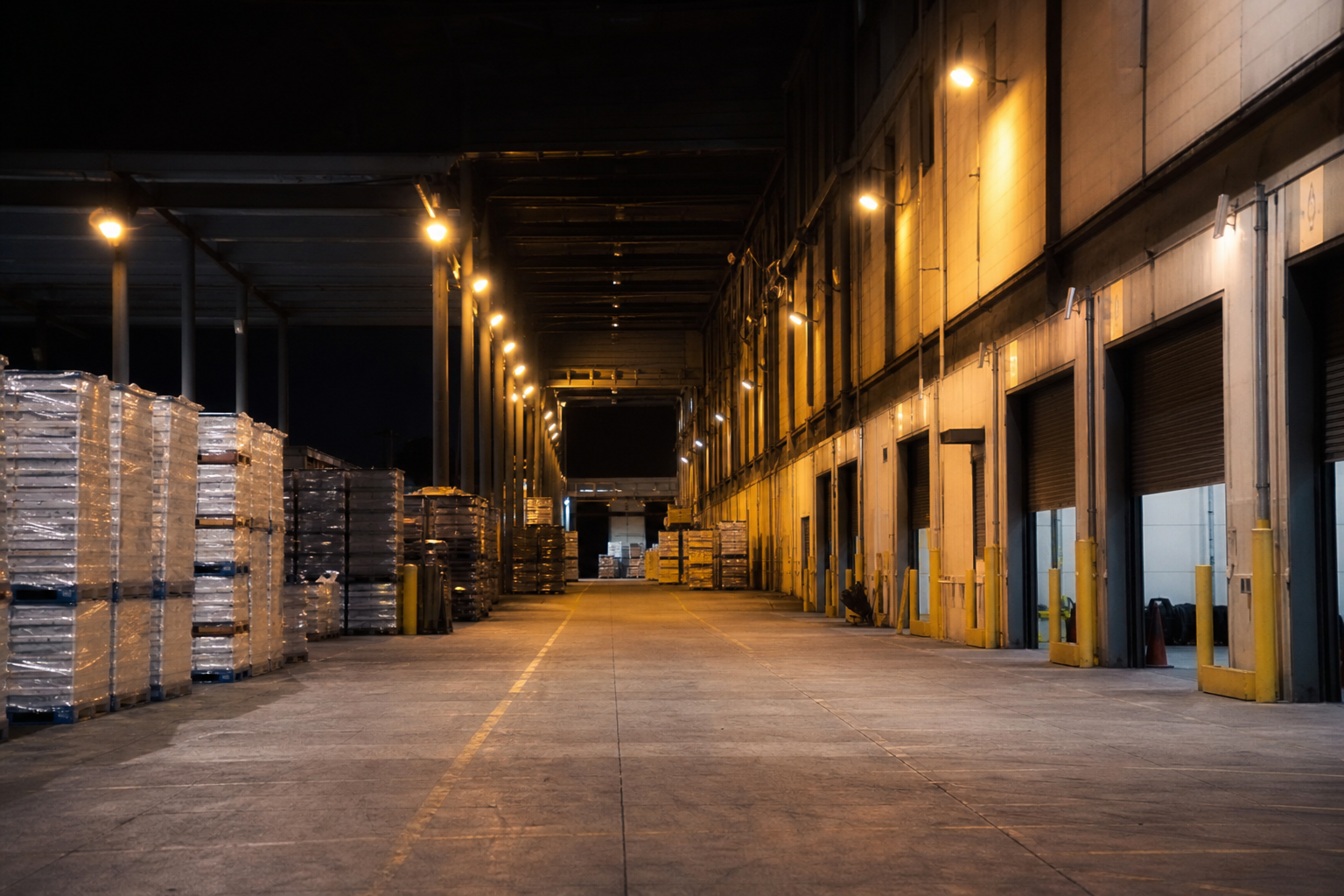
After-hours loading bay with pallet stacks and security lighting
Common gaps:
→Pallet stacks block fixed lenses within weeks of layout changes.
→Rear racking and returns bays sit in partial shadow.
→Vandalism or theft at dock perimeters outside main aisle coverage.
→Operators juggling multiple sites cannot watch every feed live.
Mobile sensors change coverage geometry. A moving platform revisits angles fixed poles never see. The point is presence verification on a schedule, not more pixels on the same pole.
4.Detect: on-device models flag human presence after hours.
5.Alert: duty manager receives mobile notification with location and snapshot in ~3 minutes vs next guard round.
6.Log: audit-ready record for insurer or internal security review.
7.Charge: return to dock between loops.
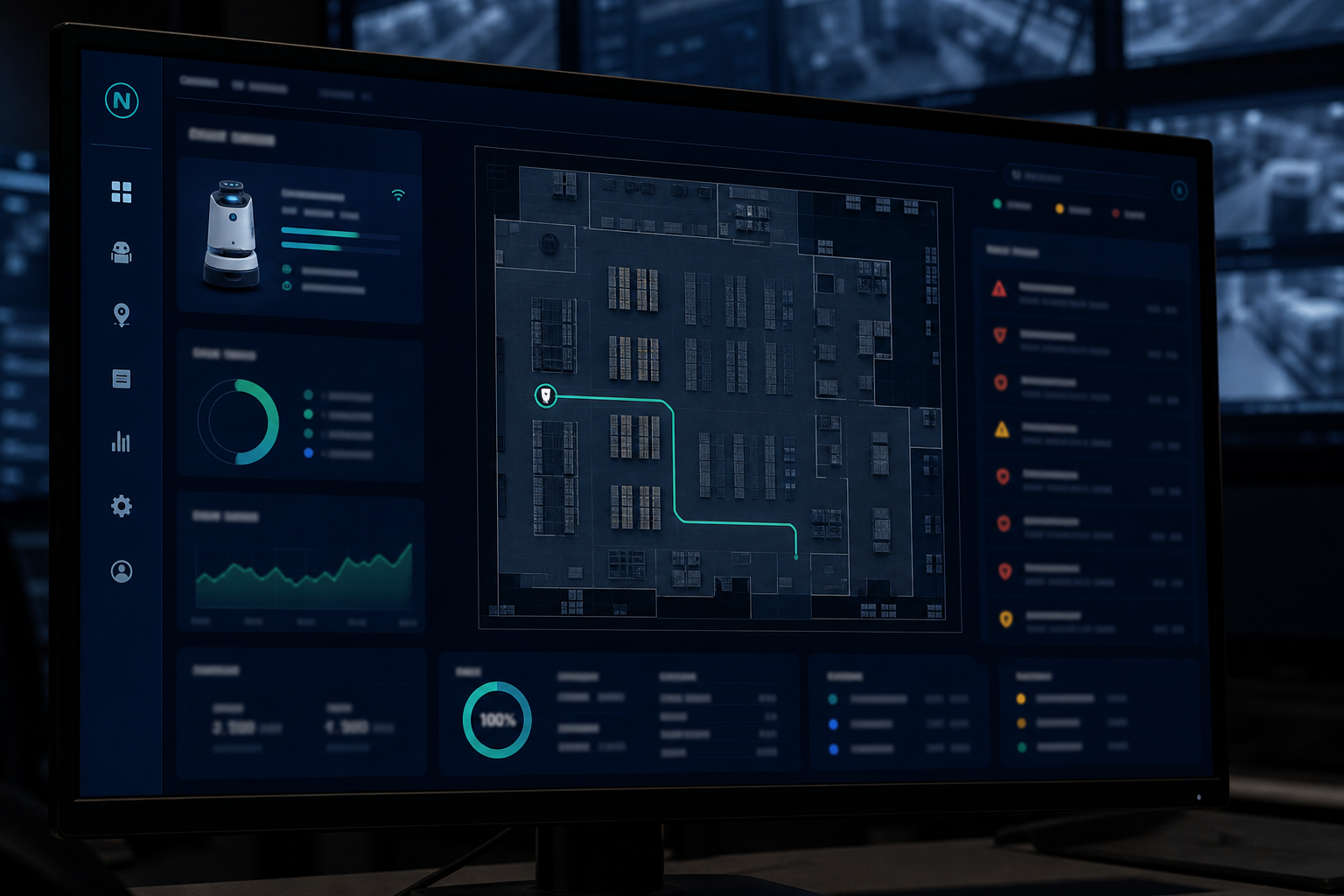
Mapped patrol route on an operations dashboard
Video for detection processes on-premises. No routine cloud upload for inference. That matches privacy expectations for sites handling commercial inventory and staff footage.
Compare to retail video architecture in edge AI vs cloud CCTV: latency and custody rules apply equally to warehouses.
When should you choose robots vs guards alone?
Signal
Guards alone
Add autonomous patrol
Floor area
Under 2,000 m², single aisle
8,000 m²+ with rack blind spots
Round gap
Under 30 minutes
60+ minutes between high-value passes
Incidents
Rare, near cameras
Events in blind zones, morning discovery
Budget
24/7 guard unaffordable
Redeploy guard to exceptions
Audit ask
Paper sign-in sheets
Digital geo-tagged logs
Robots do not arrest intruders. They compress time-to-awareness and produce evidence. Guards still matter for escalation.
Bespoke vision on fixed cameras can complement patrol for PPE or dock compliance by day. See bespoke computer vision vs off-the-shelf for when static cameras need site-specific models.
What does a deployment look like in practice?
Western Sydney distribution centre · 12,000 m² · 3PL operator
Before: Six fixed cameras covered dock face and main aisle. Rear racking and returns bay sat in partial blind spots. Night guard did two rounds; effective gap up to 75 minutes between passes through the high-value zone.
Intervention: NeuraBots autonomous patrol robot with laser-mapped patrol: dock perimeter, returns bay, cold-store entry on a 45-minute loop. On-device human presence detection after hours; alerts to duty manager via mobile app. Video processed on-premises.
Outcome (90 days): Documented patrol coverage every night (audit-ready logs). Two after-hours presence events flagged and verified within ~3 minutes vs previous response tied to next guard round. Guard redeployed to exception handling, not repetitive walking.
Results vary by site layout and guard baseline. Pilot one building, measure gap closure and incident response time, then expand.
What are the honest limits?
Autonomous patrol is not universal:
→Small sites under one guard's line of sight may not justify robotics.
→Stairs and extreme terrain may limit platform choice.
→Public-facing retail differs from fenced DCs; use case is logistics and manufacturing after hours.
→Requires route maintenance when layout changes (new racking, seasonal stock).
→Does not replace access control at gates and dock doors.
We will recommend more fixed cameras or guard hours when robotics is overkill.
Where NeuraBots fits
NeuraBots is NeuraIQ's autonomous security patrol for Australian logistics and industrial sites. We deliver mapping, route design, charging, on-premises detection, and model updates as a managed layer so your team runs operations, not robotics infrastructure.
See NeuraBots for logistics for sector-specific workflows. Start with a site assessment on your highest-risk after-hours window.
The bottom line
After hours, your warehouse is only as strong as the gaps between guard rounds and camera angles. Autonomous patrol turns passive recording into scheduled presence verification with alerts fast enough to matter and logs auditors actually accept.